|
|
An Insider’s Tips On Shopping for a Diamond
Posted on
Road Runner January 2007
http://www.aroundhawaii.com/lifestyle/art_and_leisure/2007-01_insiders_tips_on_shopping_for_a_diamond.html
Shopping for, and buying an engagement diamond can range from a confusing,
stressful and frustrating experience to a rewarding and exciting purchase
that marks the beginning of your life together. Why can there be such a
difference? And how can you avoid pain and agony? To a large extent, the
difference is based on whether you are patient enough to gain the
knowledge about diamonds that will allow you to make a good choice of
which seller to purchase from Here are some tips:
Avoid purchasing from the first store that you enter.
It is worth your time to visit a number of sellers. You will more than
likely save money and get a better looking stone.
Ask your family and friends about their experiences with various stores.
If the two of you go into a store together then avoid making a “romantic,”
spur of the moment purchase.
Start your life together off on a good note. Be patient and make a
purchase that will please you for a lifetime. In fact, it would be a good
idea to check the background of the seller before you make a purchase as
you might be surprised at the number of prior complaints from other
consumers that a store has generated. Contact the following offices for
information on different sellers:
Hawaii State Office of Consumer Protection
State Office Tower, 8th Floor
235 S. Beretania St.
Honolulu, HI 96813
(808) 587-3222
Better Business Bureau
1132 Bishop St., Suite 1507
Honolulu, HI 96813
(808) 536-6956
Avoid the phony 50% to 70% off sales.
Phony discounts are designed to entice buyers who jump at the “appearance”
of a good deal. Be smart and avoid these phony sales.
Avoid being pressured into buying something because of a “Today Only” or
“Show Special” sale.
A seller can always extend a phony deadline so do not be pressured into
purchasing something under these conditions.
Be careful of buying at the local “Wholesale Trade Shows”.
A lot of companies exhibit lower quality and lower priced merchandise at
these shows. Beware of making a blanket assumption that just because a
company is at the local wholesale trade show that you will get a great
bargain. You may end up with an over-priced low quality diamond. Do you r
homework and learn what you can to make a good purchase. Know what you are
buying rather than trusting a “wholesaler”.
Be careful of sellers who present themselves as “wholesalers”.
Some sellers operate under the guise of being a “wholesaler”. Rather than
just assume that this is true you should learn all you can and make the
“wholesaler” actually prove that they are looking after your interests.
Avoid sellers that want you to pay a small deposit to “hold a stone” then
have you sign a Bill of Sale or Invoice.
An invoice or bill of sale is a legal contract. By signing such a form you
are legally bound to purchase the item. If you do not go through with the
purchase the seller can sue you.
Buy your diamond loose and not mounted.
It is best to see and purchase your diamond loose and not in a mounting.
Once a diamond is mounted it is not possible to fully verify details of
the color, clarity, weight and cut proportions of the stone. For the best
value and the best looking stone you should insist on being shown diamonds
that are not already mounted.
Purchase a diamond with a legitimate (strict) third party grading report
or certificate.
Avoid diamonds that do not have an accompanying certificate. Also avoid
diamonds that only have paperwork from the seller to avoid conflict of
interest. Widely used international third party diamond grading
laboratories include the International Gemological Laboratory (IGI),
European Gemological Laboratories (EGL), Hoge Raad Voor Diamant (HRD),
Gemological Institute of America (GIA) and American Gem Society (AGS). The
AGS report tends to be the most strict and has the most information about
the proportions of the described diamond. This is followed by the GIA
report. In our opinion the other reports should be generally avoided.
Choose the diamond shape that is right for you and choose the best looking
diamond in that shape.
Diamonds come in different shapes. Along with the traditional round
Brilliant Cut diamond you can choose from a variety of fancy shapes: Oval
Cuts, Heart Shapes, Marquise Cuts, Pear Shapes, Emerald Cuts, Princess
Cuts, Radiant Cuts, Cushion Cuts, Asscher Cuts, Royal Asscher Cuts, Lucida
Cuts, Trilliant Cuts, Flanders Brilliant Cuts and a host of lesser known
shapes. The shape of a diamond will affect it value and price. Whatever
shape you prefer, you should be aware of the fact that some stones of that
shape will look better and sparkle more than other stones. You should
focus on finding the beautiful stones in the shape you desire at a fair
price.
View the diamonds under different lighting conditions.
Stores have special lighting installed to make their diamonds look better.
The lighting is so good and so intense that even a marginal diamond can
look good. View the diamonds that you are considering away from the spot
lights and under poor lighting conditions. A well proportioned stone will
sparkle even under poor conditions.
Look for a seller that will teach you as much as possible about diamonds
and diamond grading, using laboratory instruments.
For most of us diamonds are a relatively unknown product. As with all
other retail sectors, many stores will take advantage of a consumer’s lack
of knowledge. A few stores will work for your benefit by sharing product
knowledge and insight into the industry. Therefore, look for sellers that
will openly share their knowledge of diamonds with you to place your trust
in. These sellers are more likely to use their knowledge and expertise for
your benefit (see 4 C’s below). Laboratory instruments to look for are:
Binocular Microscope
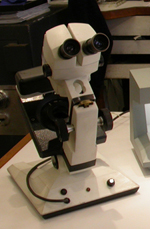
A binocular microscope will enable you to more clearly view the clarity of
a diamond. Using both eyes lets you have a fuller three-dimensional look
into the stone. The better Binocular Microscopes have zoom capability and
are also back lit and have a darkened back field that together allow for a
clearer view of any imperfections. A microscope is user friendly, is easy
to use and will let you see much more than a hand held loupe of the same
power.
Diamond Lite
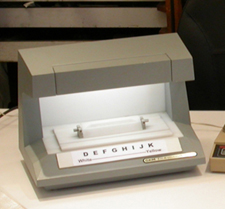
A Diamond Lite is an instrument that, using filtered fluorescent light and
a dull white background, creates the ideal lighting and background
conditions to best view the color of diamonds. Diamonds will be placed
face down so that you are more easily able to view the true body color of
a diamond. It is generally used with a Master Color Set of diamonds.
Master Color Grading Set of Comparison Stones
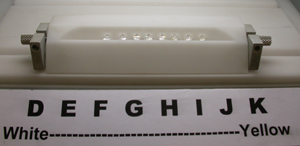
A Master Color Set is a group of diamonds or CZ’s that will, in a
step-wise fashion, define a range of diamond color. For example, each of
the colors D through K on the Color Grading Scale would make an excellent
Master Color Grading Set. By comparing a diamond with the stones of the
Master Color Set the color of that diamond can be determined.
Photoscope
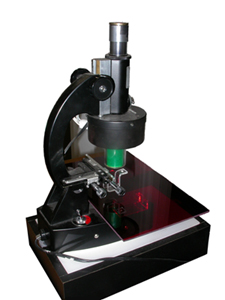
A Photoscope is a unique instrument that can assess light-return and
light-loss from a diamond. It is a powerful tool that can help to identify
which of several diamonds returns the most light.
If you consider purchasing an Ideal or Super Ideal Cut diamond then make
sure that you have printed proof that the diamond meets these standards.
In order to be called “Ideal Cut” there are specific ranges that a diamond
must meet for Average Table Diameter %, Average Crown Angle (in degrees),
Average Girdle Thickness, Average Pavilion Depth %, Culet Size, Polish and
Symmetry. If a stone is presented to you as Ideal or Super Ideal Cut then
make sure that diamond does indeed meet each and every criterion.
If you consider purchasing an Ideal or Super Ideal Cut diamond then make
sure to try to view at least two of these side-by-side.
Not all Ideal Cut or Super Ideal Cut diamonds will look the same. Some
Ideal Cut diamonds will look better than others. A side-by-side comparison
could make it evident.
If you purchase a diamond that has a laboratory report then make sure that
(1) you receive at least a photocopy of the report before you walk out of
the store and (2) that the name of the laboratory and the report number
are both written on your invoice.
Having a copy of the diamond grading report will clearly identify the
diamond that you are paying for. Having the laboratory and report number
written on the invoice is a legal warranty that the seller must live up
to. Some sellers have falsely sold stones as “GIA certified” (or AGS, EGL,
etc.) and failed to ever provide the GIA Diamond Grading Report.
Beware of diamond switching.
Have a copy of the diamond grading report of your diamond with you
whenever you have to leave your diamond ring with a store for servicing.
Get a written receipt from the store that cites details of the quality of
your diamond based on your report along with the Laboratory report number.
When you pick up the diamond make sure to inspect it with a microscope and
use the report to verify that it is the same diamond before leaving the
store. This will insure that the diamond you get back is yours.
Your decision to join your lives together in love is a joyous and
momentous step for both of you. Your diamond and ring are symbols of that
love, joy and commitment. Take a bit of time to determine what is best for
you..
|